
The Science of Happiness and Its Impact on Longevity
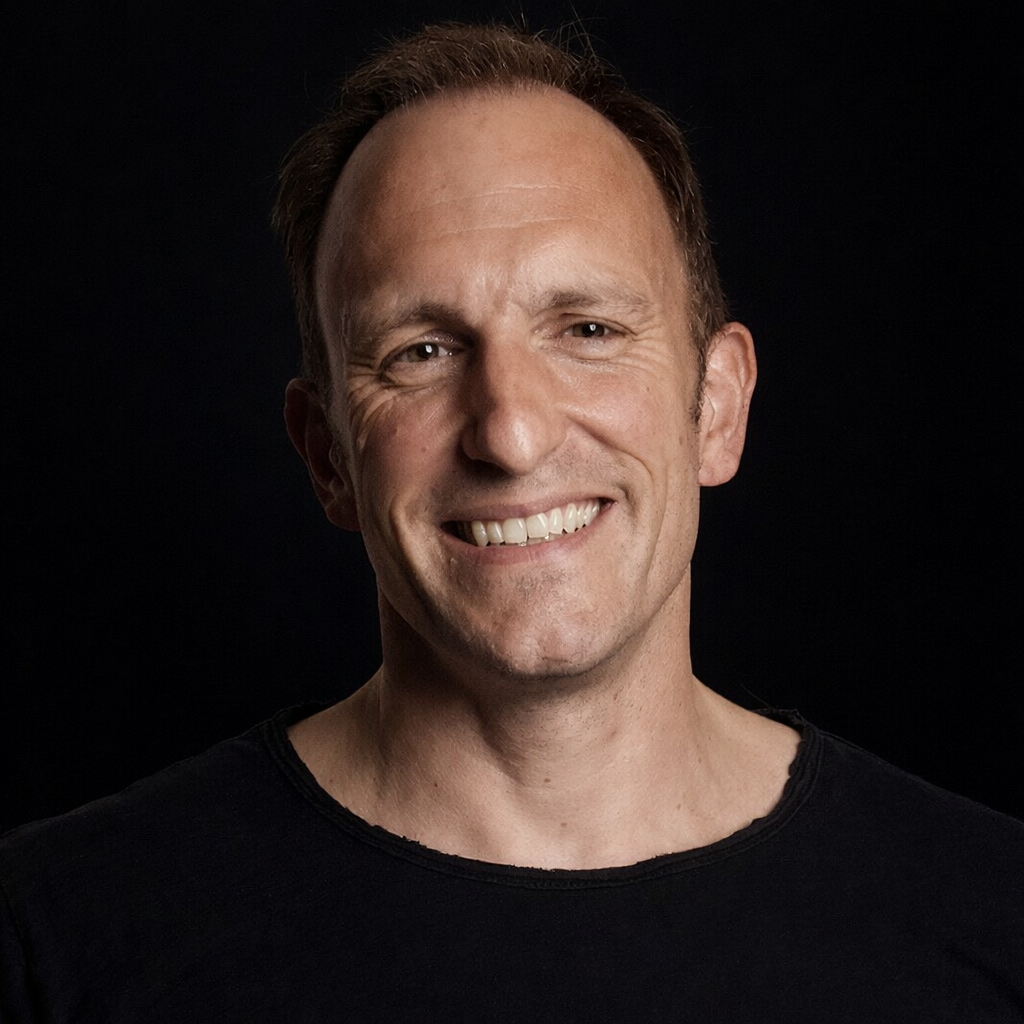
Speaker biography
Dr. Axel Bouchon is a neuroscientist, biochemist, author, serial entrepreneur, and co-founder and CEO of Matter Neuroscience. After leading major innovation efforts at companies including Bayer and Moderna, he founded Matter Neuroscience to identify biomarkers for happiness and translate brain research into practical tools for everyday life.
The following text is generated with artificial intelligence. Accuracy is not guaranteed.
Decoding The Neurobiology Of Happiness & Its Impact On Longevity
“Feeling happy or feeling good extends your life by ten to fifteen years, disease-free. As someone who has worked on medications for twenty-five years in the pharmaceutical industry, this is the best drug I’ve ever seen.”
— Axel Bouchon
Description
Positive emotions extend disease-free longevity by fifteen years, leveraging biological time rooted in emotional significance rather than physical clocks. While AI mimics repetition, humans utilize neurotransmitter combinations—dopamine, serotonin, and oxytocin—to encode peak memories. Matter Neuroscience used 7 Tesla fMRI mapping to identify gratitude and contentment as evolutionary landmarks linked to cannabinoid and psychedelic receptors. This biomathematical framework integrates deep diagnostics with neurofeedback to maximize the longevity triangle: living long, healthy, and happy.
Summary
- Humans lack a physical sense of time, instead experiencing life through biological time where the brain assigns importance based on the emotional significance of memories.
- Happiness is a potent driver of longevity, with studies showing it can extend a disease-free life by 10 to 15 years and significantly reduce the risk of inflammatory conditions.
- Advanced neuroimaging has created a map of human happiness, revealing that emotions like gratitude and amusement are tied to specific combinations of neurotransmitters in the brain.
- Human learning relies on emotional significance rather than just repetition, a unique biological process that differentiates human intelligence from the data-driven mimicry of AI.
- True well-being requires balancing ancient drivers like dopamine with younger evolutionary emotions like gratitude and contentment, which provide fulfillment even when experienced alone.
Key points
- Individuals who transition to a happier state later in life, even after age 55, can still increase their lifespan by six to eight years.
- An individual's immediate subjective rating of their own emotions, if captured within the first three seconds, provides data as reliable as a high-resolution brain scan.
- Sophisticated emotions like contentment and gratitude are evolutionarily unique because they allow the brain to experience the benefits of social neurotransmitters (like oxytocin and cannabinoids) even when a person is alone.
- Substance addiction is scientifically defined as a "theft" of human identity because it provides a chemical shortcut that prevents the brain from learning how to find genuine meaning in experienced reality.
- While AI can process complex "omics" data and mimic human patterns through repetition, it is biologically incapable of the emotional learning required to understand the significance of a human life.
Things to learn
- Aim to maximize the "area of your life triangle" by ensuring your daily routine balances longevity and physical health with active pursuits of personal happiness and emotional richness.
- Conduct a "peak memory inventory" by documenting your top 27 most significant life experiences to help your brain prioritize biological time and meaningful moments over the simple passage of physical time.
- Practice "rapid emotional check-ins" where you acknowledge your feelings within the first three seconds of an event to bypass social or religious conditioning and gain an honest assessment of your well-being.
- Choose human-to-human interaction for health and wellness coaching rather than relying solely on AI, ensuring your guidance is based on "experienced reality" and emotional understanding rather than just repetitive data processing.
- Intentionally engage in activities that foster gratitude and contentment, such as solitary reflection, to activate advanced neurotransmitter pathways that provide fulfillment independent of external social recognition or status.
Notable quotes
- “The only thing our life is, is nothing else than a string of memories. Our brain uses biological time, attaching importance to what matters.”
- “Longevity cuts it too short. For us, a good life is long, healthy, and happy. The point of living richer must always be at the forefront.”
- “If we are grateful and content, we get everything. Our brain is happy. We have developed a mechanism to be happy with ourselves.”
- “Anything that is stealing your freedom to decide what you like is stealing who you are as a human. That is the most important message.”
- “The idea of longevity is one thing. A rich life is something different.”
Questions to ask
- How do cultural differences and varying societal values influence the specific neurotransmitter signatures within the "Human Map of Happiness," and is the chemical composition of an emotion like gratitude universal across different global populations?
- You mentioned that it is never too late to "win back" years of life; what specific neuroplasticity mechanisms allow an older brain to effectively re-map its emotional significance pathways after decades of a lower happiness baseline?
- Since your research focuses on peak positive memories, how does the brain's reward system interact with the processing of negative emotions or trauma to ensure that the "biomathematical equation" for longevity remains balanced?
- Beyond the neurofeedback sessions in the fMRI, what specific daily behavioral rituals or environmental adjustments are most effective for sustaining the high-level neurotransmitter combinations like contentment and gratitude over the long term?
- Given that biological time is a string of memories, what role does sleep and the consolidation of memory play in ensuring these "emotionally significant" experiences are properly encoded to impact our physiological health and inflammatory markers?
Keywords
Magazine article
Decoding The Neurobiology Of Happiness And Its Impact On Longevity
At Hololife Longevity Cote D'Azur In Nice, Dr. Axel Bouchon Argued That A Longer Life Meant Little Without A Richer One
At Hololife Longevity Cote d'Azur, held in Nice, France, on Thursday, 12 March 2026, Dr. Axel Bouchon delivered a clear and provocative message: longevity, if stripped of meaning, was too narrow a goal for modern medicine and modern life.
In his presentation, “The Science of Happiness and Its Impact on Longevity,” Bouchon, a neuroscientist, biochemist, author, entrepreneur, and co-founder and CEO of Matter Neuroscience, pressed the audience to rethink one of the central assumptions of the longevity movement. The question, he suggested, was not simply how long human beings could live, but how well, how deeply, and how joyfully.
“Longevity cuts it too short. For us, a good life is long, healthy, and happy. The point of living richer must always be at the forefront,” he said.
The Brain Did Not Count Years. It Counted Meaning
Bouchon began by dismantling the authority of the clock. Humans, he argued, did not truly experience life through physical time. Minutes, hours, and years were learned abstractions. Biology cared about something else.
“The only thing our life is, is nothing else than a string of memories. Our brain uses biological time, attaching importance to what matters,” he said.
It was a striking frame for a longevity conference. Age, usually measured in birthdays and biomarkers, was recast as something more intimate and less mechanical. Life, in Bouchon’s telling, was not accumulated evenly. It expanded and contracted according to emotional significance.
A fleeting moment, if meaningful enough, could fill the mind with extraordinary density. A first kiss, a wave caught at exactly the right second, a moment of awe or terror or joy, these were not merely events. They were anchors in biological time.
Happiness Was Presented As A Powerful Protective Force
From there, Bouchon turned to one of the talk’s most arresting claims: happiness was not a decorative byproduct of health, but a driver of it.
Drawing on large epidemiological studies, he said positive emotional states could extend disease-free longevity by ten to fifteen years. Even for people who shifted into a happier state later in life, after the age of 55, the gain could still be substantial, between six and eight additional years.
He framed this evidence with the blunt admiration of someone who had spent decades in pharmaceutical innovation.
If these findings held, happiness was not simply good advice. It was, in effect, one of the most powerful interventions available.
He also pointed to reduced risk across inflammatory conditions and suggested that the absence of happiness was too often treated as a soft concern in a field obsessed with hard metrics.
Emotional Learning Marked The Line Between Humans And Machines
Bouchon’s argument widened beyond health into cognition, identity, and the limits of artificial intelligence. Human beings, he said, learned in two radically different ways. One was repetition, the domain of drills, rules, and patterned recall. The other was emotional significance.
That second form of learning, he argued, was uniquely human.
A person did not need to repeat a transformative event in order to remember it. One experience, if emotionally charged, could be retained for life. This was not data processing in the computational sense. It was lived significance, encoded in the body and brain.
AI, by contrast, could mimic patterns and process massive data streams, including omics datasets and behavioural correlations. But in Bouchon’s formulation, it could not inhabit experienced reality. It could not feel the first kiss, the grief, the gratitude, the relief. It could not know why one memory mattered more than another.
That distinction was not philosophical ornament. For Bouchon, it was central to any credible science of well-being.
Matter Neuroscience Sought To Map Happiness In The Brain
Bouchon then outlined the work of Matter Neuroscience, the company he co-founded after senior innovation roles at Bayer and Moderna. The ambition was both scientific and practical: to identify biomarkers for happiness and translate neuroscience into tools people could use in daily life.
Using 7 Tesla fMRI mapping, the company sought to build what he described as a map of human happiness, tracing specific emotional states to combinations of neurotransmitters and receptor systems in the brain.
Among the most significant findings he described were the roles of gratitude and contentment, emotions he portrayed not as sentimental luxuries but as advanced evolutionary achievements. These states, he said, were linked to pathways involving social chemistry, including oxytocin, cannabinoid receptors, and even systems associated with psychedelic biology.
The force of the idea lay in this: some of the most sophisticated forms of well-being did not depend on constant stimulation, competition, or external approval. The brain, if properly tuned, could generate fulfillment even in solitude.
“If we are grateful and content, we get everything. Our brain is happy. We have developed a mechanism to be happy with ourselves,” he said.
The Longevity Triangle Extended Beyond Medicine
Bouchon proposed what he called a broader vision of the “longevity triangle”: living long, living healthy, and living happy. The goal was not to trade one side against another, nor to mistake lifespan for flourishing.
This framework joined deep diagnostics with neurofeedback and behavioural insight, aiming to move from passive measurement to active cultivation. In practice, that meant paying attention not only to physical health markers, but also to emotional richness, memory formation, and the quality of subjective experience.
One of his more intriguing claims concerned self-reporting. If a person captured their emotional state within the first three seconds of an experience, he said, that immediate subjective signal could be as informative as a high-resolution brain scan. Before social conditioning stepped in, before the mind began revising and censoring itself, there was often a brief window of honesty.
The implication was radical in its simplicity: listening closely to oneself, and quickly, might be a form of diagnostic precision.
Freedom, Identity, And The Stakes Of A Meaningful Life
By the end of the talk, Bouchon had moved beyond neurochemistry into a more moral register. The science of happiness, as he described it, was not only about pleasure or stress reduction. It was about agency.
“Anything that is stealing your freedom to decide what you like is stealing who you are as a human. That is the most important message,” he said.
In that formulation, addiction became more than dependency. It became a shortcut that robbed the brain of its chance to learn meaning from real experience. Identity itself depended on the freedom to discover what mattered, rather than being chemically or culturally dragged toward counterfeit rewards.
That was why, for Bouchon, the idea of a rich life remained larger than the idea of a long one.
“The idea of longevity is one thing. A rich life is something different,” he said.
A Scientific Case For Joy
There was something quietly defiant in the way Bouchon presented happiness to a room primed for metrics, interventions, and lifespan strategies. He did not offer it as a vague aspiration or a wellness slogan. He offered it as a measurable biological force, one with consequences for disease, memory, and survival itself.
His argument suggested that the future of longevity science might depend on catching up with something older than medicine and more difficult to quantify than bloodwork: the possibility that a human life was not best understood by how long it lasted, but by how much meaning the brain found worth remembering.
Research article
The science of happiness: how positive emotions redefine human longevity
The quest for a longer life has traditionally been dominated by physical metrics and molecular interventions. From metabolic flexibility protocols to cellular senescence therapies, the longevity industry has largely viewed aging as a purely physiological engineering problem. However, a profound paradigm shift took center stage on Thursday, 12th of March 2026, in Nice, France. Against the backdrop of the Mediterranean Sea, the Hololife Longevity Cote d'Azur summit convened world-renowned researchers, health professionals, and wellness entrepreneurs to explore advanced strategies for optimizing human health [1]. It was here that Dr. Axel Bouchon, a prominent neuroscientist, biochemist, and serial entrepreneur, presented a thesis that fundamentally disrupts the traditional biological view of aging: happiness is not merely a byproduct of a good life, but the biological engine that drives exceptional longevity.
Dr. Bouchon, who serves as the co-founder and CEO of Matter Neuroscience, has spent years at the intersection of pharmacology and brain science. After leading major innovation efforts at pharmaceutical giants including Bayer and Moderna, he pivoted away from traditional disease management. He founded Matter Neuroscience, securing substantial venture funding, with a singular, ambitious mission: to identify a universal biomarker for happiness and translate cutting-edge brain research into practical tools for everyday life [2]. During his keynote presentation, titled "The Science of Happiness and Its Impact on Longevity," Bouchon detailed how advanced ultra-high-field neuroimaging has finally allowed scientists to map the human experience of joy, revealing that sophisticated positive emotions can extend a disease-free life by up to fifteen years.
Redefining the perception of time through emotional memory
The traditional medical establishment measures human life in chronological increments—minutes, hours, days, and years. Yet, according to Bouchon, the human brain possesses absolutely no direct physical sense for this type of chronological time. Our biology cannot "feel" age as measured by a clock or a calendar. Instead, humans experience existence through what Bouchon refers to as biological time. In this paradigm, the brain assigns value and importance to the passage of time based entirely on the emotional significance of memories.
As Bouchon noted to the audience, the only thing our life constitutes is a continuous string of memories. Because the brain uses biological time, it attaches outsized importance to what truly matters emotionally. This explains the psychological phenomenon of time dilation during peak experiences. A highly emotionally significant event, such as successfully riding a massive wave that physically lasts only two to three seconds, can be elaborated and replayed by the brain for fifteen to sixty minutes. The brain effectively elongates the perception of time based on the density of the emotional experience. Therefore, to live a "longer" life subjectively, an individual must accumulate a higher density of emotionally significant memories, moving away from the mundane passage of chronological time and into a richly textured biological timeline.
The neurological divide between human intelligence and artificial mimicry
This reliance on emotional significance is not just a quirk of perception; it is the fundamental basis of human learning and cognitive development. Bouchon highlighted that learning generally occurs through two distinct pathways. The first is repetition. This is the mechanical process used for memorizing language vocabulary, internalizing mathematical rules, or navigating a daily commute to school. Crucially, this repetition-based learning is the exact mechanism that artificial intelligence utilizes. AI models process massive amounts of complex data, mimicking human patterns through endless iteration.
The second pathway is emotional significance, which is entirely unique to biological entities and currently impossible for artificial intelligence to replicate. Humans have the extraordinary capacity to learn from a single, emotionally charged event—such as a first kiss or a sudden trauma—without ever needing repetition to encode the memory permanently. This is known as emotional learning. While AI mimics and processes cold data, human beings process experienced reality. Because AI is biologically incapable of feeling, it cannot utilize emotional learning to understand the significance of an event. It lacks the neurochemical hardware to experience the profound physiological shift that cements a meaningful human memory.
Epidemiological evidence for the longevity dividend of happiness
The philosophical assertion that happiness enriches life is ancient, but the empirical data confirming that happiness physically extends life is a recent and staggering development. Extensive epidemiological studies tracking millions of individuals over decades have demonstrated a profound causal connection between subjective well-being and exceptional longevity. Bouchon presented data showing that individuals who consistently feel happy or good extend their disease-free lifespan by ten to fifteen years. This physiological effect is so potent that it is currently considered superior to any single pharmaceutical drug on the market.
This data is heavily supported by landmark longitudinal research. A massive, decades-long study published in the Proceedings of the National Academy of Sciences tracked massive cohorts to observe the effects of positive psychosocial factors on aging. The researchers found that the most optimistic men and women demonstrated, on average, an eleven to fifteen percent longer lifespan compared to their least optimistic peers [3]. Furthermore, these highly optimistic individuals had a fifty to seventy percent greater chance of achieving exceptional longevity, which researchers define as surviving past the age of eighty-five [4]. These profound results held true even after scientists carefully adjusted for variables such as socioeconomic status, baseline health conditions, depression, and lifestyle behaviors like diet, smoking, and exercise routines.
Beyond merely extending the raw number of years lived, happiness appears to act as a powerful shield against age-related decline. Participants in various clinical studies who reported high levels of continuous happiness were found to be completely free of debilitating mental conditions, such as Alzheimer's disease, as well as severe inflammatory conditions, including multiple sclerosis. Furthermore, the neuroplasticity of the brain ensures that the benefits of happiness are not exclusively reserved for those who have been joyful their entire lives. Bouchon emphasized a highly optimistic finding regarding neuroplasticity: individuals who were unfulfilled or unhappy for fifty-five years, but who then initiated a defined, positive lifestyle change, could still gain an additional six to eight years of life. While starting early yields the maximum biological compounding interest, the brain's ability to heal and extend physical life remains active well into late adulthood.
Solving the biomathematical equation of a complete life
The ultimate goal of Matter Neuroscience, as outlined at the Hololife summit, is not merely to push the boundaries of chronological survival. Bouchon specifically noted that the concept of longevity alone cuts the human experience too short. Instead, the objective is to solve a biomathematical equation that defines a "good life" through three non-negotiable variables: living long, living healthy, and living happy. The critical emphasis is on the integration of all three.
Bouchon conceptualized this as a longevity triangle, where the goal is to maximize the total area enclosed by these three points. A long life is the foundational prerequisite necessary to experience health and happiness. Predictably, there is a strong, well-documented correlation between being unhealthy and being unhappy. Furthermore, living long and living healthy are tightly correlated metrics. However, a major divergence occurs between health and happiness. Being physically healthy does not automatically correlate with being happy. Many individuals meticulously focus on their physical health, consulting with specialists, tracking their biomarkers, and eating perfectly optimized diets, only to spend their time engaging in high-stress, unfulfilling activities that actively erode their happiness. Therefore, aiming to expand the area of the life triangle requires deliberate, daily intervention to ensure that emotional richness is cultivated with the same discipline as cardiovascular fitness.
Breaking the technological barrier with ultra-high-field neuroimaging
Despite the clear epidemiological evidence linking happiness to longevity, quantifying joy at a molecular level proved to be an immense scientific challenge. For decades, the medical community has possessed abundant diagnostic data for health and physical longevity, but there was no reliable, quantifiable method or biological marker for happiness. Bouchon and his team spent four and a half years attempting to isolate this biomarker. They utilized an arsenal of advanced wearables, including electroencephalography, quantitative EEG, and functional near-infrared spectroscopy. They also relied on standard 1.5 Tesla and 3 Tesla magnetic resonance imaging scanners. All of these initial efforts failed to identify a distinct biomarker for happiness or positive emotions.
The breakthrough finally occurred due to the convergence of three critical factors. The most vital was a monumental leap in medical imaging technology. Siemens successfully launched a 7 Tesla functional magnetic resonance imaging scanner equipped with a novel brain coil. This ultra-high-field scanner increased the resolution of the fMRI by a factor of one hundred to one hundred and fifty times compared to standard clinical machines. The 7 Tesla technology allows researchers to observe incredibly small, mesoscale structures within the brain, measuring how signals across the brain fluctuate in sync over time to form unified networks that regulate internal states [5]. This level of precision made it possible to conduct real-time semantic neurofeedback, allowing scientists to extract complex emotional information from the brain's deepest and smallest regions [6].
The second converging factor was a deep phylogenetic analysis of the brain. By researching the evolutionary history of conserved reward systems, specific molecules, and primal emotions, Matter Neuroscience created guideposts. They used this evolutionary map to prompt study participants to recall highly specific fractions of good memories, such as moments of pure sexual desire, genuine amusement, or deep contentment. This fractionalized questioning drastically improved the quality of the data inputted into the 7 Tesla scanner. Finally, the third factor was the integration of rigorous subjective well-being measurements. By partnering with the World Happiness Research Institute, the team was able to continuously and accurately measure the subjective well-being of the participants while they were inside the scanner.
Cartography of the mind and the evolutionary map of joy
Armed with the 7 Tesla fMRI and hundreds of participants, the research team embarked on a massive data collection effort over six months. Participants were asked to recall their top twenty-seven "peak memories"—the most profoundly significant emotional moments of their lives—while also recording smaller, daily moments of joy. The resulting analysis generated what Bouchon describes as the first comprehensive human map of happiness.
This map challenges thousands of years of philosophical assumption. Since the days of Aristotle, thinkers have debated the duality of human happiness, often dividing it into eudaimonia, which represents deep meaning, virtue, and human flourishing, and hedonia, which represents raw physical pleasure and the avoidance of pain. The 7 Tesla fMRI data physicalized this philosophy, proving that a truly happy brain requires the activation of both systems. The scans revealed that emotions are distributed systematically across the brain's architecture. The left side of the brain houses unqualified emotions, while the right side appears devoid of emotional generation. More importantly, the map revealed an evolutionary timeline. The lower, inner areas of the brain represent the oldest evolutionary structures and are responsible for primal pleasure and hedonia. Conversely, the outer cortical areas are evolutionarily much younger and are responsible for the complex, meaning-driven emotions associated with eudaimonia. Specific emotions were observed lighting up highly localized patches of the brain. Amusement and social recognition clustered in specific cortical patches, gratitude illuminated the absolute youngest cortical areas, while raw pleasure fired deep within the ancient, inner core of the brain.
The neurochemical hierarchy of human motivation and connection
By overlaying high-resolution positron emission tomography data onto the MRI scans, Bouchon's team successfully mapped a correlation between these physical brain patches and twelve to thirteen specific neurotransmitter receptors. This created a neurochemical code of happiness, arranged in a strict evolutionary hierarchy.
At the base of this hierarchy is dopamine. As the oldest molecule in the reward system, dopamine is present in virtually all animals and serves as the fundamental driver of motivation. When dopamine combines with testosterone, which acts as a neurotransmitter in this context rather than just a hormone, it produces sexual desire. When dopamine is synthesized alongside serotonin, it generates feelings of social recognition and self-esteem. According to Bouchon, these three molecules—dopamine, testosterone, and serotonin—are roughly four hundred to five hundred million years old. Notably, these are the exact, and only, molecules triggered by modern capitalism. Because this system is so ancient, any animal with a basic reward system can molecularly participate in the motivational loops required by a capitalist economic system, seeking status, acquiring resources, and desiring recognition.
However, the neurochemical story of happiness does not end there. Approximately twenty-five million years ago, a new molecule emerged in the evolutionary record: oxytocin. This powerful neurotransmitter facilitated the development of family love, allowing mammals to bond deeply and engage in the long-term caregiving required for vulnerable children and the elderly. Even younger in the evolutionary timeline is the development of cannabinoid receptors in the brain, which are associated with the profound, non-familial social bonding required for deep friendship and tribal cooperation. Finally, the brain utilizes a generalized pleasure mechanism that acts as a chemical booster. When an organism is motivated to do something and simultaneously likes the result, this pleasure booster activates, cementing the action into a strong, repeatable memory.
The highest order of human emotion and the danger of shortcuts
What truly separates human intelligence and emotional capacity from the rest of the animal kingdom is the ability to synthesize combinations of three different neurotransmitters simultaneously to create highly sophisticated emotional states. Humans are the only species capable of these complex chemical intersections.
For instance, the feeling of amusement is not a single chemical reaction. It is a potent, evolutionarily young emotion that occurs when the brain simultaneously releases dopamine, endogenous opioids, and cannabinoids. It is almost always experienced in a social setting, binding groups together through shared laughter and joy. Contentment represents another unique triad, combining oxytocin, cannabinoids, and dopamine. Fascinatingly, contentment is uniquely experienced when an individual is completely alone. This suggests a profound evolutionary leap: the human brain developed a specific, advanced biochemical mechanism to achieve genuine happiness and peace in the absence of a tribe or family, allowing for independent survival and emotional self-regulation.
The youngest and most advanced human emotion mapped by the researchers is gratitude. When a human feels genuine gratitude, the brain orchestrates a complex release of cannabinoids, serotonin, and dopamine [7]. When gratitude is experienced in tandem with contentment, it results in a state of complete, holistic brain happiness. As Bouchon stated, if individuals can achieve states of gratitude and contentment, they effectively have everything they need, as the brain has developed an internal mechanism to be entirely happy with itself.
However, the biological mechanism that creates these profound states of joy is highly vulnerable to manipulation. The natural process for creating a positive memory requires effort and genuine interaction with reality. An individual must take an action, after which the brain assesses if the action was meaningful. If it triggers a feeling of meaning, the brain then assesses if the event was significant enough to store as a positive, long-term memory.
Substance addiction completely bypasses this natural architectural process. Drugs of abuse, particularly potent stimulants like cocaine or synthetic opioids like fentanyl, directly hack the neurotransmitter receptors. They artificially force the release of dopamine and opioids, immediately creating a manufactured feeling of intense enthusiasm and emotional significance without any preceding meaningful action. Bouchon pointed to the extreme danger of "speedballing"—the combination of a depressant like fentanyl with a stimulant like cocaine or crystal methamphetamine. This highly lethal combination artificially triggers massive, simultaneous chemical releases that the brain perceives as the most significant event of its existence, creating an overwhelmingly powerful, dangerous memory loop that compels the user to repeat the behavior at all costs. From a neuroscientific perspective, substance addiction is defined as a literal theft of human identity. By hijacking the brain's freedom to decide what it genuinely likes based on experienced reality, chemical shortcuts steal the very essence of what makes a person human.
Translating advanced neurobiology into everyday practices
Understanding the complex biomathematics and evolutionary neurobiology of happiness is only useful if it can be translated into actionable behavioral changes. While the science presented at the Hololife summit relied on multi-million-dollar 7 Tesla MRI machines, the practical applications for extending longevity and expanding the life triangle are accessible to anyone willing to reshape their daily routines.
To prioritize biological time over the simple, chronological ticking of a clock, individuals are encouraged to conduct a thorough peak memory inventory. This involves deeply reflecting on and documenting the top twenty-seven most emotionally significant experiences of their lives. By actively mapping out these moments, individuals train their brains to focus on and seek out experiences that carry heavy emotional weight, effectively slowing down the subjective perception of aging and enriching their biological timeline.
Furthermore, developing the habit of rapid emotional check-ins can bypass years of ingrained social, corporate, or religious conditioning. Bouchon's research indicates that an individual's immediate, subjective rating of their own emotional state is incredibly accurate, provided it is captured within the first three seconds of an experience. If a person can learn to honestly acknowledge their gut-level feeling in that tiny three-second window, they can obtain a data point regarding their well-being that is nearly as reliable as a high-resolution brain scan. This allows individuals to quickly identify and discard activities, environments, or relationships that are quietly draining their emotional health, regardless of how beneficial those things might appear on a superficial or societal level.
When seeking guidance for health, wellness, or psychological growth, the data strongly suggests prioritizing human-to-human interaction over the increasing reliance on artificial intelligence coaches or algorithmic health planners. Because AI is fundamentally limited to processing data through repetitive mimicry, it cannot grasp the emotional weight or the experienced reality of a human life. Human coaching, empathy, and social bonding activate the crucial oxytocin and cannabinoid pathways that AI interactions leave entirely dormant.
Ultimately, the most powerful intervention for extending disease-free longevity by a decade or more is the intentional, daily cultivation of the brain's youngest and most sophisticated emotions: gratitude and contentment. Rather than solely chasing the ancient, capitalist-driven dopamine loops of endless acquisition and social status, individuals must carve out dedicated time for solitary reflection. Engaging in mindful practices that foster thankfulness and inner peace activates the advanced neural pathways that release serotonin, cannabinoids, and oxytocin. This creates a neurochemical environment that drastically lowers stress hormones, reduces systemic inflammation, and fortifies the brain against cognitive decline. By mastering the internal mechanisms of gratitude, individuals unlock the biological capacity to be deeply, sustainably happy with themselves, fulfilling the ultimate equation of a life that is simultaneously long, healthy, and exceptionally rich.
- [1] The French Riviera is hosting its first major longevity summit this month
- [2] Matter emerges from stealth with $26m to find a biomarker for happiness
- [3] Optimism is associated with exceptional longevity in 2 epidemiologic cohorts of men and women
- [4] New Evidence That Optimists Live Longer
- [5] State-Of-The-Art 7 Tesla MRI Reveals How the Human Brain Anticipates and Regulates the Body’s Needs
- [6] Semantic Neurofeedback of Emotions with 7 Tesla fMRI
- [7] How Gratitude Rewires Your Brain
Sources:
Social posts
Copy generated post templates for each platform.